
The Complete Guide to Business Loans

A business loan is a targeted financial instrument designed to provide companies with the capital needed to fund operations, purchase inventory, bridge cash flow gaps, or execute long-term expansion strategies. Navigating the commercial debt market requires a clear understanding of your company’s financial health, collateral, and specific capital needs.
At Lender Tribune, we break down the complexities of commercial finance so you can make informed decisions, optimize your capital stack, and secure the most favorable borrowing terms.
Comparing the Primary Types of Business Loans
There is no one-size-fits-all business loan. Selecting the wrong product can result in excessive interest costs or strained daily cash flow. Here is a breakdown of the most common financing vehicles available to modern businesses:
| Loan Product | Best Used For | Typical Repayment Terms | Funding Speed |
| Traditional Term Loan | Predictable, long-term investments and expansions. | 1 to 10 years | 2 to 4 weeks |
| SBA 7(a) Loan | Working capital, business acquisitions, debt refinancing. | 10 to 25 years | 30 to 90 days |
| Business Line of Credit | Short-term cash flow gaps, payroll, inventory restocking. | Revolving (Annual renewals) | 1 to 3 days |
| Equipment Financing | Purchasing heavy machinery, commercial vehicles, or servers. | 1 to 7 years (Tied to asset life) | 2 to 5 days |
| Merchant Cash Advance (MCA) | Urgent, short-term capital needs for businesses with high credit card sales. | 3 to 18 months | 24 to 48 hours |
If a lender is offering you a Merchant Cash Advance, read this first — there are critical differences between an MCA and a business loan.
The Underwriting Process: What Lenders Evaluate
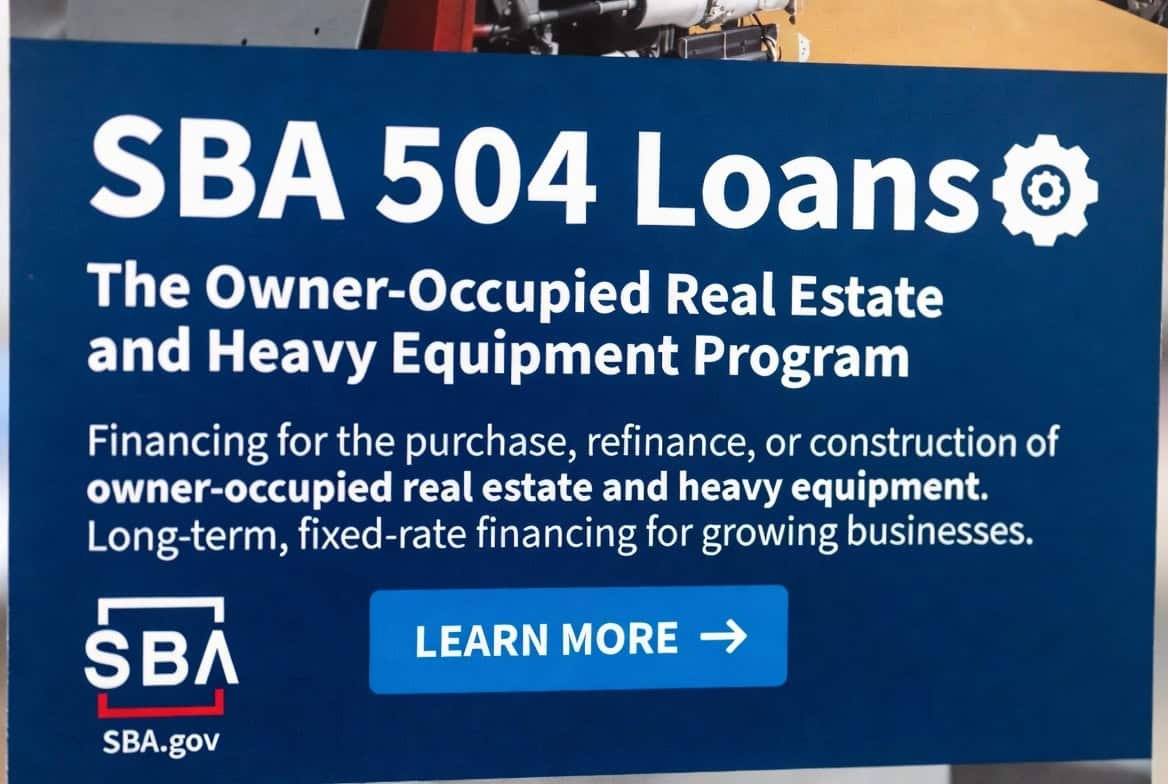
Whether you apply at a national bank or an online alternative lender, underwriters will assess your risk profile using the “Five C’s of Credit”: Character, Capacity, Capital, Collateral, and Conditions. ‘For businesses purchasing real estate or equipment, the SBA offers government-backed options with below-market rates. See our full SBA 504 vs. 7(a) comparison.
At a practical level, this means lenders will scrutinize three core metrics:
- Credit Profile: Traditional banks and SBA lenders typically require a personal FICO score of 680+ from all business owners holding a 20% or greater stake. They will also review your business credit profile (such as your Paydex score) for historical vendor payment trends.
- Time in Business: Statistically, businesses fail most often in their first two years. Consequently, traditional lenders require at least 24 months of operational history. Alternative lenders may accept businesses with as little as 6 months of history.
- Cash Flow and Revenue: Lenders must ensure your business generates enough consistent income to cover new debt service. Most conventional lenders look for a minimum of $100,000 to $250,000 in annual gross revenue.
Calculating Your Cost of Capital
Understanding exactly how your loan will be paid back is critical to maintaining a healthy balance sheet.
For standard term loans and commercial mortgages, lenders use an amortizing interest structure. The standard formula used by financial institutions to calculate your fixed monthly payment (M) is:
M = P × [ r(1 + r)^n / ( (1 + r)^n – 1 ) ]
- M = Fixed monthly payment
- P = Principal loan amount
- r = Periodic interest rate (Annual rate divided by 12 for monthly payments)
- n = Total number of payment periods (Months)
Lender Tribune Pro-Tip: Always ask your lender for the Annual Percentage Rate (APR) rather than just the interest rate. The APR includes the base interest rate plus all origination fees, closing costs, and underwriting fees, giving you the true, apples-to-apples cost of the debt.
How to Prepare a Winning Loan Application
Failing to provide a complete financial package is the number one reason commercial loan applications are delayed or denied. Follow these steps to ensure a smooth underwriting process:
- Define the “Use of Funds”: Never ask a lender for “as much as I can get.” Provide a specific dollar amount tied directly to vendor quotes, purchase orders, or detailed expansion budgets.
- Gather Your Financials: Prepare your last three years of business and personal tax returns, year-to-date Profit & Loss (P&L) statements, current balance sheets, and a complete debt schedule detailing any existing business liabilities.
- Prepare Bank Statements: Most lenders require the last 6 to 12 months of business bank statements to verify your average daily balances and ensure revenue consistency.
- Draft an Executive Summary: Especially for larger term loans or SBA financing, a brief business plan explaining your industry position, competitive advantage, and repayment strategy can heavily influence an underwriter’s decision.
You may also like:
Commercial Real Estate Finance
Page 1 — DSCR Loans: The Investor’s Guide to Income-Based Real Estate Financing
Page 2 — Commercial Bridge Loans: Short-Term Financing for Properties in Transition
Page 3 — Mezzanine Financing & Preferred Equity: Filling the Capital Stack Gap
Page 4 — Fix-and-Flip Loans: The Beginner’s Complete Guide to Financing Your First Rehab
Corporate & Business Finance
Page 5 — Invoice Factoring vs. Accounts Receivable Financing
Page 6 — SBA 504 vs. SBA 7(a) Loans: Which Is Right for You?
Page 7 — Merchant Cash Advances: Risks, Rates, and Alternatives
Page 8 — Commercial Equipment Financing & Sale-Leasebacks
Page 9 – SBA 7(a) vs. SBA 504 Loans: Which Is Right for You?