
Florida Real Estate Investment Guide 2026: Tax-Free Cash Flow + Coastal Appreciation
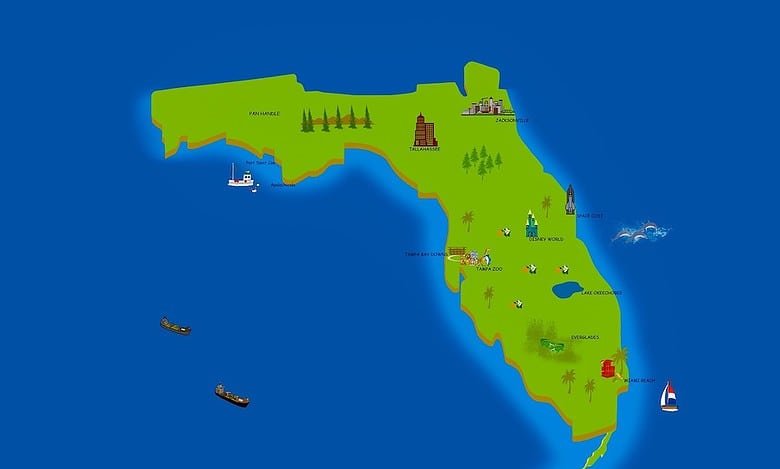
Why Florida Ranks #2 for Real Estate Investment in 2026
Florida combines zero state income tax, landlord-favorable eviction laws, and statewide rent control preemption with explosive growth across Tampa, Jacksonville, and Miami metros driving 2.8% GDP expansion. With 1,100 new residents daily, Fortune 500 corporate relocations (Citadel, Goldman Sachs), and the nation’s strongest tourism economy generating $130 billion annually, Florida offers investors tax-advantaged cash flow, coastal appreciation, and short-term rental dominance across 825 miles of beaches.
- Why Florida Ranks #2 for Real Estate Investment in 2026
- Why Florida Delivers Tax-Free Wealth Building
- Legislative Landscape: Landlord-Friendly Framework with 2026 Updates
- Top 3 High-Growth Metropolitan Statistical Areas (MSAs)
- Investment Risk Profile: Balanced Assessment for 2026
- FAQ: Florida Real Estate Investment
- Lender Perspective: Optimal Loan Products for Florida Investments
Why Florida Delivers Tax-Free Wealth Building
Macro Economic Drivers (2026 Data)
Population Surge:
- +1.9% annual growth rate (highest among large states)
- Daily net migration: 1,100 residents (400,000+ annually)
- Population rank: 3rd largest state (23.1 million), projected to surpass New York by 2028
- Demographics: 67% homeownership rate drives rental scarcity in growth markets
GDP Performance:
- Florida GDP: $1.6 trillion (4th largest state economy)
- 2026 projected growth: 2.8% (exceeds national 2.1% forecast)
- Key sectors: Tourism (14% of GDP), finance (11%), healthcare (9%), logistics (8%)
Employment Landscape:
- Unemployment rate: 3.2% (December 2025, below national 3.7%)
- Job creation: 325,000 net new jobs in 2025
- Corporate relocations (2023-2025): Citadel ($1B+ Miami move), Goldman Sachs (Miami expansion), Blackstone (Miami office), Thoma Bravo (Miami HQ)
- Financial services boom: Miami now #3 US financial hub after NYC and Chicago
Tax Advantages:
- Zero state income tax (saves landlords 5-13% vs. California/New York)
- No corporate income tax on rental LLCs (exemption for passive real estate)
- Property tax: 0.98% average (46th lowest nationally)
- Homestead exemption: $50,000 deduction increases rental demand from owner-occupants
Legislative Landscape: Landlord-Friendly Framework with 2026 Updates
Eviction Process Efficiency
3-Day Notice for Nonpayment:
- Florida Statutes §83.56 allows landlords to issue 3-day notice for rent default
- Average eviction timeline: 4-6 weeks from notice to writ of possession
- No “just cause” requirement for lease non-renewal (except Section 8 housing)
Court Process:
- County courts handle evictions (expedited dockets in major metros)
- Summary judgment: Available if tenant doesn’t respond within 5 days
- Writ of possession: Typically issued within 24 hours of judgment
- Sheriff enforcement: 24-48 hour tenant removal post-writ
Rent Control Preemption (2023 Landmark Legislation)
Florida Statutes §83.49 (Amended 2023):
- State law prohibits all municipal rent control ordinances
- Orlando’s attempted cap (2022) was struck down under new statute
- Miami Beach’s rent stabilization (pre-2023) grandfathered but cannot expand
- Result: Full pricing autonomy for landlords in all 67 counties
Security Deposit & Lease Terms
- Security deposit: Capped at 2 months’ rent (residential leases)
- Return timeline: 15 days if no deductions, 30 days with itemized list
- Interest requirement: Must pay 5% annual interest on deposits held >6 months (if not commingled)
- Late fees: No statutory cap, but must be “reasonable” (typically 10-15% of rent)
Short-Term Rental Regulations
State-Level Framework:
- Florida Vacation Rental Act (§509.032): Regulates STRs as distinct from hotels
- Tourist Development Tax: 5-6% countywide (varies by jurisdiction)
- HOA restrictions: Allowed, but cannot ban STRs outright if existed pre-deed
Local Variations:
- Miami Beach: Registration required, noise restrictions, no new STR licenses in single-family zones (2025)
- Tampa: Minimal regulations, 3.5% bed tax
- Orlando: Tourist corridor friendly, Kissimmee/Davenport allow unrestricted STRs
- Panama City Beach: Spring break restrictions, but otherwise investor-friendly
Opportunity: Florida captures 18% of US Airbnb revenue ($9.2B annually), with average nightly rates of $250-$450 in coastal markets.
Insurance & Climate Legislation (2026 Critical Updates)
Property Insurance Reform:
- SB 2-A (2023) & SB 154 (2024): Stabilized insurance market after 2022 crisis
- Citizens Property Insurance: State-backed “insurer of last resort” enrollment capped at 1.2M policies
- Private market recovery: 8 new carriers entered Florida (2024-2025)
- Average premiums: $4,200/year (down from $6,000 peak in 2023)
Hurricane Mitigation Incentives:
- My Safe Florida Home Program: $10,000 grants for wind-resistant upgrades
- Premium discounts: 20-45% for fortified roofs, impact windows, storm shutters
Flood Insurance:
- NFIP Rate Reform (2024): Risk-based pricing increased premiums 18-35% in coastal zones
- Mitigation: Elevate structures, target Flood Zone X properties, or build flood premiums into rent

Top 3 High-Growth Metropolitan Statistical Areas (MSAs)
1. Tampa-St. Petersburg-Clearwater MSA
Population: 3.3 million (+2.1% annual growth)
Median Home Price: $385,000
Average Rent: $2,100 (single-family), $1,850 (multifamily)
12-Month Appreciation: +5.8%
Cap Rate Average: 5.4% (multifamily), 6.2% (single-family rentals)
Economic Anchors:
- Finance/FinTech: Raymond James HQ, Synovus relocation, 85,000 finance jobs
- Healthcare: Tampa General, Moffitt Cancer Center, BayCare (130,000 healthcare employees)
- Port Tampa Bay: #1 Florida port by tonnage, logistics/distribution
- MacDill Air Force Base: 16,000 military/civilian employees
Investment Zones:
- Downtown Tampa: Condos/multifamily, $400K-$600K, 4-5% yields, walkability premium
- South Tampa (Hyde Park, Palma Ceia): Single-family, $650K-$1.2M, executive rentals
- St. Petersburg (Grand Central, Historic Kenwood): Gentrifying, $350K-$500K, 6-7% CoC
- Clearwater/Dunedin: Beach proximity, $450K-$700K, STR + long-term hybrid
Strategy: Tampa’s affordability advantage vs. Miami (40% lower prices) + comparable job growth = best Florida cash flow.
→ Read the full Tampa Market Spotlight
2. Jacksonville MSA
Population: 1.7 million (+2.7% annual growth, fastest in Florida)
Median Home Price: $335,000
Average Rent: $1,850 (single-family), $1,550 (multifamily)
12-Month Appreciation: +6.9%
Cap Rate Average: 6.8% (best among major FL metros)
Economic Anchors:
- Logistics/distribution: Amazon (6 fulfillment centers), Walmart DC, FedEx hub
- Financial services: Fidelity, Deutsche Bank, Bank of America operations
- Military: NAS Jacksonville, Naval Station Mayport (40,000 combined)
- Healthcare: Mayo Clinic, Baptist Health, UF Health
Investment Thesis:
- 30% population growth projected by 2030 (University of Florida forecast)
- No state income tax + low cost of living attracts retirees and young professionals
- $335K median price is 35% below Tampa, 45% below Orlando
Investment Zones:
- Riverside/San Marco: Historic, walkable, $400K-$600K, young professional rentals
- Southside (Mandarin, Julington Creek): Family-friendly, $350K-$500K, A-schools, 7-8% CoC
- Beaches (Atlantic Beach, Neptune Beach): STR + vacation rentals, $500K-$900K
- Northside (Duval/Nassau County line): Value plays, $250K-$350K, 9-11% yields
Risk Mitigation: Jacksonville’s inland location (20 miles from coast) reduces hurricane insurance costs by 40-60% vs. Miami/Tampa Beach.
→ Read the full Jacksonville Market Spotlight
3. Miami-Fort Lauderdale-West Palm Beach MSA
Population: 6.2 million (8th largest in US)
Median Home Price: $565,000 (Miami proper), $525,000 (Fort Lauderdale), $445,000 (West Palm Beach)
Average Rent: $3,200 (Miami), $2,800 (Fort Lauderdale), $2,400 (West Palm Beach)
12-Month Appreciation: +3.4% (cooling from 2021-2023 surge)
Cap Rate Average: 3.8-4.5% (appreciation play, not cash flow)
Economic Anchors:
- International finance: Citadel, Blackstone, Thoma Bravo HQs, 120+ hedge funds relocated since 2020
- Port of Miami: #1 cruise port globally, cargo logistics
- Tourism: 24 million visitors annually, $18B hotel/hospitality industry
- Real estate/construction: 45,000 units under construction (2026), development boom
Investment Thesis:
- Wealth migration: 33% of NYC millionaires considering Florida move (Knight Frank, 2025)
- No state income tax saves high earners 13% (vs. California) or 10.9% (vs. New York)
- International capital: Latin American investors, European buyers (strong euro/dollar parity)
Investment Zones:
- Brickell: Luxury condos, $600K-$2M, corporate rentals, 3-4% yields
- Wynwood/Edgewater: Gentrifying, $450K-$700K, young professionals, STR potential
- Fort Lauderdale (Las Olas, Victoria Park): $500K-$900K, beach proximity, 4-5% CoC
- West Palm Beach (Northwood, Flamingo Park): Value plays, $400K-$650K, Palm Beach County schools
Risk Factors:
- Insurance: $6,000-$12,000/year for coastal single-family homes
- Hurricane exposure: Category 3+ risk every 3-5 years statistically
- Oversupply risk: 45,000 condo units delivering 2026-2027 (price compression possible)
Strategy: Miami is a long-term appreciation play (10-15 year hold), not a cash flow market. Target Opportunity Zonesfor tax benefits or focus on Fort Lauderdale/West Palm Beach for better yields.
→ Read the full Miami Market Spotlight
Investment Risk Profile: Balanced Assessment for 2026
Risks to Monitor
1. Climate & Insurance Volatility
- Hurricane exposure: $60B in insured losses from 2022’s Ian, 2024’s Idalia
- Insurance crisis (2022-2023): 15 carriers exited market, premiums spiked 100-200%
- Current status: Stabilizing but still 60% above 2020 levels
- Mitigation: Inland markets (Orlando, Gainesville), elevated structures, fortified construction
2. Property Tax Increases
- “Save Our Homes” caps: 3% annual increase for homesteaded properties, but no cap for investor properties
- Reassessments: Counties increasing appraisals 10-20% annually in growth markets
- Mitigation: File appeals (50% success rate), target counties with lower millage rates (Polk, Marion)
3. Condo Market Risks
- Surfside collapse (2021) aftermath: New inspection requirements, special assessments
- Condo reserves: 2024 law requires 100% funding by 2028 (many buildings facing $30K-$100K/unit assessments)
- Strategy: Avoid pre-1990 condos near coast unless reserves are fully funded
4. Seasonal Vacancy (Tourism Markets)
- Summer slowdown: May-August occupancy drops 30-40% in beach markets
- Hurricane season (June-November): Bookings decline, insurance claims
- Mitigation: Mid-term rentals (30-90 days), annual leases with corporate tenants
Strengths Mitigating Risks
Demographic Tailwinds:
- Retiree influx: 10,000 Baby Boomers turn 65 daily, 40% consider Florida
- Remote work: No income tax attracts high-earning remote tech workers
- International buyers: 24% of Florida home purchases are foreign nationals (NAR, 2025)
Infrastructure Investment:
- Brightline expansion: Miami-Orlando operational (2023), Tampa extension by 2028
- Port expansions: Miami, Jacksonville, Tampa deepening for post-Panamax ships
- I-4 Ultimate Project: $2.3B Orlando corridor upgrade (completed 2025)
Institutional Capital:
- $28 billion in Florida multifamily acquisitions (2024-2025) by Blackstone, Starwood, Greystar
- Single-family rental: Invitation Homes, Progress Residential own 45,000+ Florida homes
FAQ: Florida Real Estate Investment
Lender Perspective: Optimal Loan Products for Florida Investments
DSCR Loans (Debt Service Coverage Ratio)
- Best for: Cash-flowing properties in Tampa, Jacksonville, Orlando suburbs
- Typical terms: 80% LTV, 1.15x-1.25x DSCR requirement, 7.8-9.0% rates (2026)
- No income verification: Ideal for out-of-state investors, self-employed
- Florida-specific: Lenders require flood insurance verification in SFHA zones
- Lender recommendation: LenderTribune.com/loans offers Florida-specialized DSCR programs
Fix & Flip Loans
- Best for: Tampa gentrification zones (Seminole Heights), Jacksonville Riverside, Miami Wynwood
- Terms: 90% of purchase + 100% of rehab, 9-12 month terms, 10-14% rates
- Exit strategy: Sell retail or refinance into long-term rental
- Sweet spot: $300K-$500K purchase price for highest margins
Short-Term Rental Financing
- Best for: Orlando vacation homes, Miami Beach condos, Tampa waterfront
- Terms: 75-80% LTV, DSCR based on STR income projections (AirDNA reports), 8.5-10% rates
- Requirement: 6-12 months operating history or strong market comps
- Advantage: Underwrite at $4,000-$6,000/month STR income vs. $2,000 long-term rent
Portfolio Loans
- Best for: Investors with 5+ Florida properties across metros
- Terms: Cross-collateralization, blanket financing, 6.8-8.2% rates
- Advantage: Simplified underwriting, relationship pricing, faster closings
Ready to leverage Florida’s tax-free cash flow and coastal appreciation?
- Explore Florida Investment Properties →
- Get Pre-Approved for Florida DSCR Loans →
- Download: Florida Market Data Dashboard (2026) →
- Read City Spotlights: Tampa | Jacksonville | Miami | Orlando
Related State Guides:
- Texas Real Estate Investment Guide 2026
- Tennessee Real Estate Investment Guide 2026
- North Carolina Real Estate Investment Guide 2026
Top Florida City Spotlights:
- Tampa-St. Petersburg Market Analysis
- Jacksonville Market Analysis
- Miami Market Analysis
- Orlando Market Analysis
Last Updated: February 2026 | Data Sources: US Census Bureau, Florida Realtors, FRED Economic Data, Florida Statutes, LenderTribune Market Research
Disclaimer: This guide is for informational purposes only and does not constitute financial or legal advice. Consult with licensed professionals before making investment decisions.